JIMI HENDRIX IN HD3D – THE RED HOUSE PROJECT – Part 2
Augmented Audio Reality For A Diminished World
“…late at night, alone in the dark studio with a head /torso mic cradled in my arms, recorder slung over my shoulder, dancing and whirling around the studio to a re-amped, “Midnight Lamp”, I could feel Jimi’s presence – he was – smiling…”
S.A.M. : We are here with Geoffrey Bond the Producer, Engineer and Co-creator of, “Red House -The Jimi Hendrix 3D Soundtheater”, for part 2 of a 3 part series. This portion was recorded in May 2020. (It’s been about a month since the part one interview -fyi)
Let’s see – we left off where you had just completed the new transfers from the original analogue master tapes.
That seems right
After exhaling – what came next?
(laughs) We did an LA turn around and flew to Seattle and drove straight out to PSR still utterly amazed yet again by what we’d just experienced – there’s that word. Even (James) Johnson was bouncing off the walls with energy and he’s a very layed back guy!
I heard you nicknamed him “J. Dogg Power Leisure-ist”
No, no, not me – that was Seth Davis! Though I liked the name…
The new transfers were better?
For sure they were sooo much better, thank you. At Westlake the A to D conversions sounded very good A-B’d with the Masters. But it was really apparent how much better as soon as I extruded some of the tracks at PSR. Depth, detail – greatly increased, glassy, brittle edge – gone. Yay. No unexpected digital artifacts flying around in 3D space. After hearing the new transfers we bulk erased the Dash Tapes…

No!
Just kidding!
Moving on – what was the concept of the “3D Hendrix Virtual Audio Experience”
It was – ‘we just want to ‘take you for a drive‘. (Bond grins) The idea was to make an extreme HD3D Audio “Ride” for the ears and mind featuring Jimi’s music and some imagined scenairios based on his lyrics or his popular mythology. We wanted it to be way over the top – to be the most intense, immersive audio trip that could be made. And it also had to follow the Hendrix Directive of course.
The ‘Hendrix Directive’?
That’s what I call the Hendrix quote we talked about last time. You know, “I want audio that goes up, across, and down — all we have now is across and across”.
I remember – sure. Jimi wanting 3D sound in what 1967, 68? That’s an excellent quote.
’68 I believe.
So then what was,or is, a “3D Sound Theater”?
It’s the name I coined for a real
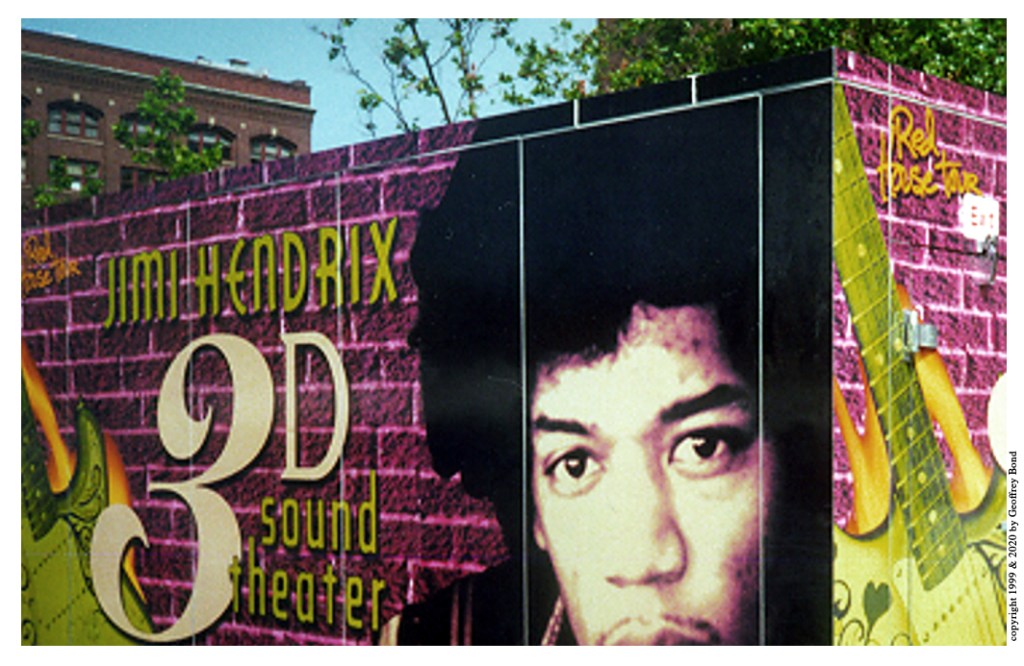
or virtual 3D Audio venue

where the 3D Soundplay is presented.
“Soundplay”?
Yeah. A “Soundplay”, my term, is the script for a “Sound Theater Play”. Think of it as being like a Radio Drama – it’s audio only, has dialogue, sound effects, ambient sounds, real or simulated foley and music. And also it’s like a Screenplay:
because the real or virtual capture devices, microphones instead of cameras in this case are scripted as to the type of shot, panning, zooming, focusing, tracking, height, you know other geometries, filtering and so on. And the real or virtual actors’ locations, trajectories and and proximity to the microphones are choreographed.
What was the theme?
A “Slice of a Day in the Life of Jimi Hendrix – Time Traveler”. (Bond looks very serious, straight faced, when saying this). It’s easier to give you an example so here’s some of Scene One. You are in Studio B of Electric Ladyland which was Jimi’s upstairs living space for a little while. It’s quiet except for the muted, distant sound of a thunderstorm. Jimi arrives in the listener’s reality after 29 years away via a 3D mix of “And The Gods Made Love”. He greets the listener saying, “I see we meet again – through the ear goggles”. He then walks toward you, past you and plugs the strat that he arrived with into a Marshall and plays a riff from “Somebody’s House Is Burning”. He puts the guitar on a stand and then brushes by your chair (and you feel this) while saying, “that’s me”, as he walks toward a small radio thats been left in the “studio” slash “living room”.
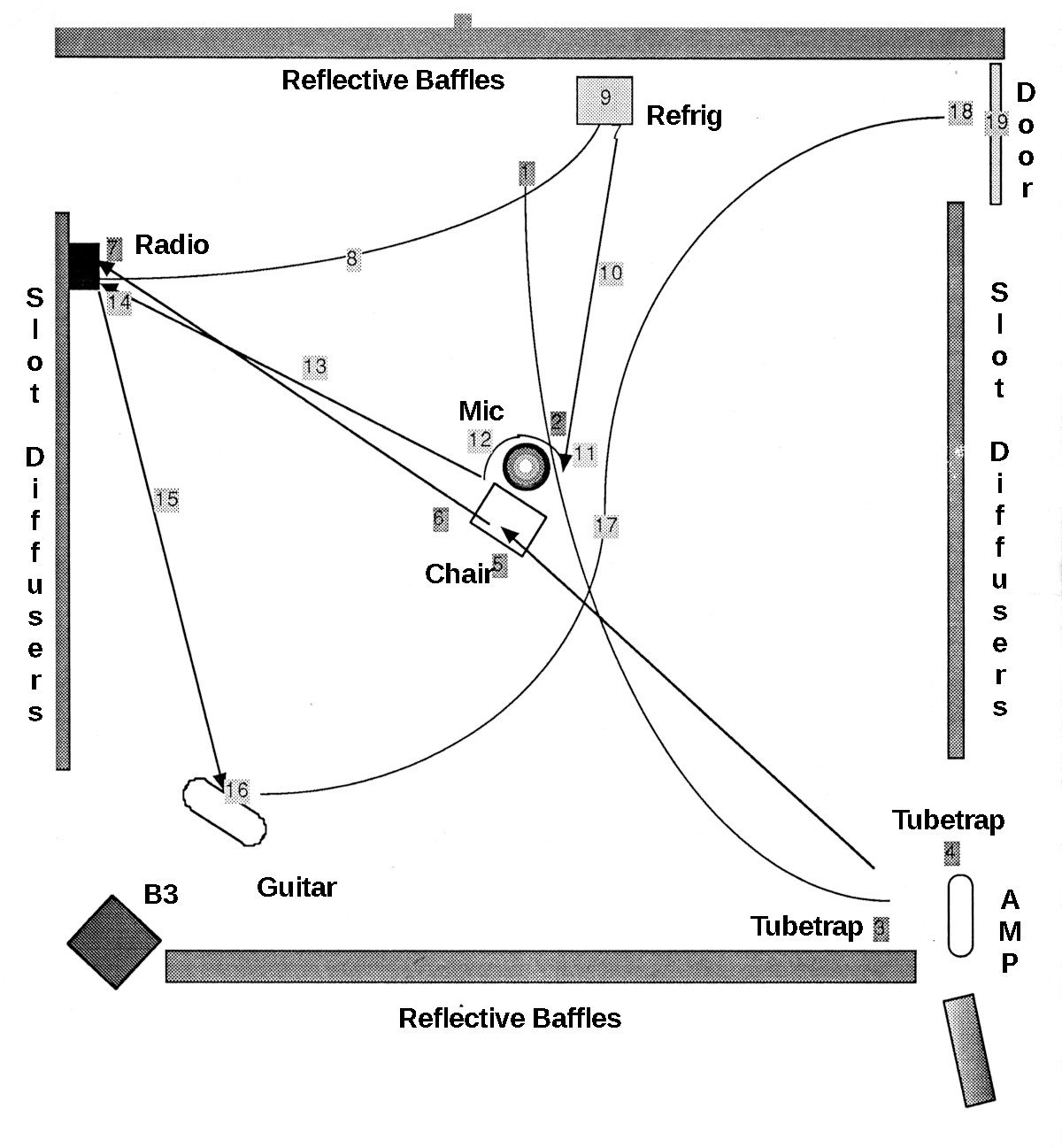
How were you able to “feel this”?
It’s the psycho-acoustics . We’ll get to that in a bit bear with-
Jimi turns on the virtual radio which is playing the fade of , “Rainy Day Dream Away”, and the radio station is of course station “E X P”.
OK, wait, I have to interrupt again, what is the Mike Finnigan, “Rainy Day Dream Away”, story?
Your good. He told me how he came to play on “Rainy Day” and “Still Raining, Still Dreaming”.
(ed note: Mr. Finnigan passed away in 2021 after this part of the interview was recorded).
Do go on
I met Mike in 1992 working on the Grand Scientific Musical Theater at the Arena He was a good friend of Scott Page’s and was in the show’s stellar band. Also, weirdly enough he was a friend of mine’s drug counselor. Knowing he’d played on it, which is one of my faves, I asked him about how it went down. This is what he told me. He was on a trip to New York (City) and recording with his bro? – not sure – in one of the studios at the Record Plant. He said they knew Hendrix was also at the Plant recording but they hadn’t seen him. Mike said that at the time he didn’t know much about Jimi other than he was a great psychedelic guitar player. Then out of the blue their control room door opens and there’s Jimi Hendrix saying, “can you come play organ on something for me?”
Of course he could.
Mike’s B3 was moved over to the studio that Jimi was working in and then with only the song’s key, a vague idea of the chord changes, and what to do (just comp you know like Jimmy Smith) they cut the freakin’ track! As soon as they finished playing it they talked for a brief moment and then cut Still Raining Still Dreaming. Shhboom – done. Jimi then cordially thanked him and that was it. Mike returned to his session. He said it all went down so fast that it was like a dream. He was like – wow what just happened?
Talk about an unbelievable experience…
Can you imagine? For sure. Even for Mr. Finnigan!
Dave Mason told me he had a similar experience and reaction after playing on, “All Along The Watchtower”. I wonder if that was a common side effect of working with Jimi?
[Small moment of two men pondering]
So let’s go back to the,uh, Scene One
OK – The virtual radio is now re-broadcasting old interviews with Jimi from the 60’s. Jimi chuckles at some of his statements and then walks to a small frig while muttering, “ole’ mother Hubbard went to the cupboard”, opens its door, gets a can of something to drink and pops it open. He wanders over to a Hammond B3 plays a few notes and then still exploring picks up a maraca and shakes it. At this point on the radio interview Jimi says .”..and then there was a knock on the door”. We suddenly hear a loud incessant pounding on the door to the “outside”. Jimi goes to the door, opens it to the sounds of the storm and none other than John Lennon saying, “do you want to join me band?” Jimi says, “sure why not “, and then we go traveling back in time with Mr. Hendrix and all, transitioning to the next scene via music and location ambient sound changes.
O…K…?
The big gotcha is that Jimi’s dialogue, the Foley, Sound FX and ambient sounds all seem very, very real while the music seems very, very sur-real. Hendrix is there in the room with you. The listener is transported, immersed in a highly defined virtual audio world with a near absolute suspension of disbelief.
Johnson used to describe it to people who had not heard it as, “it’s like Martians landing in your back yard!!!”, a reference to it being indescribable. I hope that helps.
Haha, no really…
No really, wait a minute, you need to hear a little to get it. This is the medium length version. Here.
Mr. Bond hands me a set of Sennheiser Headphones, tells me to close my eyes and hits play. After some indeterminate time he hits stop…I take off the headphones…
So there you go
I am at a loss for words.
Yes.
That really is indescribable. Amazing – I thought He was right there.
(Bond nods)
I thought I felt the chair get hit as he went by!
Its affected my hearing, too. Weird. I can really focus on the locations of sounds…your voice… I’m well high from listening to that! How did you ever get any work done? It’s like AMSR except way better way more profound…
(We take a break)
…your perceptions are heightened for awhile.
One listen explains it all. What makes it so real? How does it do that?
Well first off, you relax when you hear HD3D because probably for the 1st time in your media listening life there is enough hi-fidelity audio information with the correct psycho-acoustical directional cues, phase coherency and proper gain structure for your ear-mind mechanism to not to have to perform what I call a “McLuhan”, a simplification of one of his theories – basically its the stressful mental exercise of decodeing what the hell it is you’re listening to due to the low resolution of the production & the delivery mechanism itself. A lot of concentration is used in this constant resolving to clarify the signal to understand the information. Content becomes less important and the meaning of the work, the overall experience, is missed entirely.
“McLuhan”?
You know, Marshall McLuhan, “The Medium Is The Message”, “Understanding Media”.
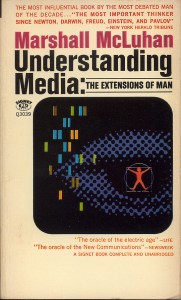
Ok yeah, I remember hearing about”The Medium Is The Message”.
There’s more – now because your mind has enough realistic sonic data you can experience what Dali called “critical paranoia”, which a misleading name for dream-like psycho-active visualizations and reality transformations from high resolution audio suggestion, heightened perception, aural stimulation and sound pattern gestalt. That’s why you can feel Jimi brush by you, the chair bump feels like it happened, his breath, smell the beer…Part of the magic comes from hardware and software based upon highly sophisticated HRTF, Torso, Pinna and ear canal models using a physical body geometric measurement and averaging approach rather then a subjective perception method. Which means it really references well over different headphones and most listeners hear the same 3D performance. And part of it is 3D technique – working with the areas of response that the ear and equipment favors. Plus the vertical axis is very well represented – one reason we soooo good. The total experience is the meaning.
That was Jimi’s father at the start!
Yeah man!
Tell us about…
I promise we’ll get to that part of the story when we talk about the tour…
Alrighty. What did you start with? The remixes or the Virtual Experience?
Because of the nature of the production I knew I was going to need to work on both at the same time! Start the remixes, source, edit and extrude the dialogue and sound effects, capture the live and virtual foley and generate some random sonic strangeness. I also needed to review some of my older 3D productions for cool generic effects I could use.
That sounds …not possible
Yes, not possible or probable under any circumstance except this was Jimi Hendrix a once in a lifetime project and we had the time and budget and if there ever was a moment to go long and make sacrifices… So I deferred sleep, raced Karts for fun and to keep my edge and I walked along the Skyko river for a little peace of mind and then worked 14 hours a day – 7.
What was the first task?
To prep the studio
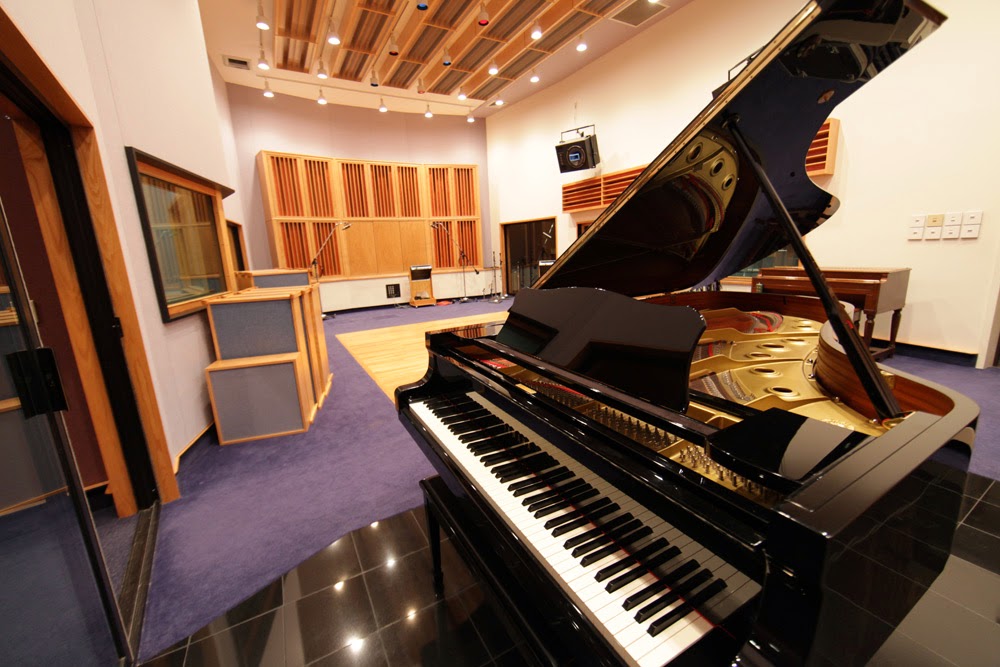
and control room and comb for more dialogue pieces that I could use. We had a working script but not the final, so I had to find what was needed to complete the final version. I used Jimi’s own recorded words for his dialogue and I was able to do edits and small tonal manipulations on certain words for matching, and to create sentences if they didn’t exist and also to reinforce or clarify meanings questions, statements. For example the line “I see we meet again” came from Woodstock while “through the ear goggles” was pre song chatter from the top of “Midnight Lamp”. Both lines were way different in pace, pitch, tone, declaration and so on. I had to put these lines together to make the opening greeting. I removed the ambient sound with an expander. Re-paced a line. Lowered the pitch of the other and slid the pitch one syllable at a time on some words. Very labor intensive.
So that’s how you constructed all of the dialogue?
Yes. Though there were a few complete sentences if memory serves. There was also some other great stuff I couldn’t actually, er maybe, did use.
Like what?
Oh like Jimi saying at the very end of “Midnight Lamp” – “It’s a fade anyway so f**k it!”
I get your point… The knocking gave me a rush and then John Lennon!
Haha good. I love it. …Jimi and John… Anyway I collected enough dialogue to finish the script, got Janie’s input and approval and a cup of coffee.
Then what?
I became the high-functioning Now Here Man. (Bond touches his nose)
I see… The other scenes were also amazing. Can you tell us a little about them?
Actually I’d rather not – for the people who have not heard it yet. Spoilers.
What about the remixes?
We decided early on not to try to emulate the original 2D mixes. How could we be so presumptuous anyway? Eddie (Kramer), Jimi and Gary Keligren had created them and in my opinion they are fantastic, perfect. And simply extruding and rendering the stereo mixes into 3D would have diluted the originals, limited the augmentation of reality for a diminished world and not delivered on Jimi’s directive. So we had to create new 3D versions from the multitracks. But – we also wanted to match form, timbres and effects as much as possible so the familiar anchors and cues that you would subconsciously expect are there, while fully immersing you and delivering a different perspective. The 3D remixes are definitely Alt. mixes – artistic interpretations of Hendrix’s spatial desires.
Would you describe the remixing set-up?
Ladies and gentleman in this ring – Analogue. In the other ring – Digital and straddling the middle is… Meeeeee.
Haha
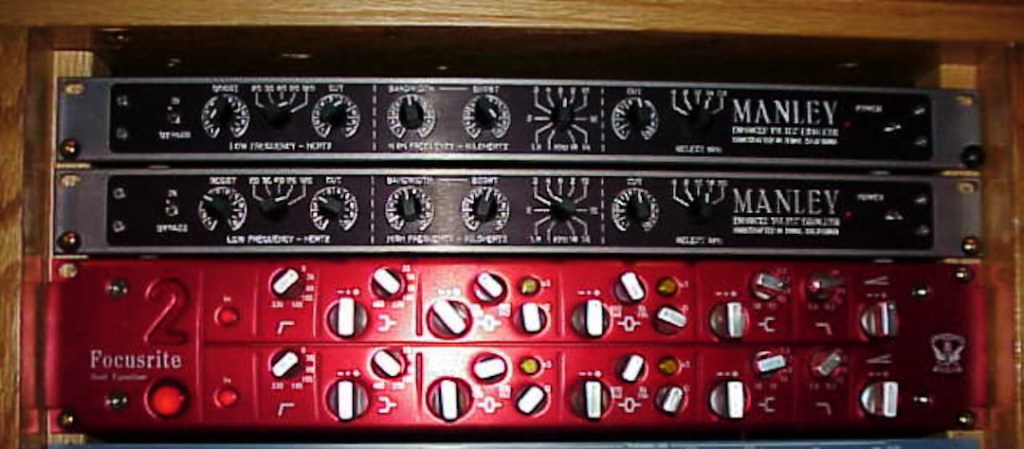
I used top grade tube gear like the Manley MU,
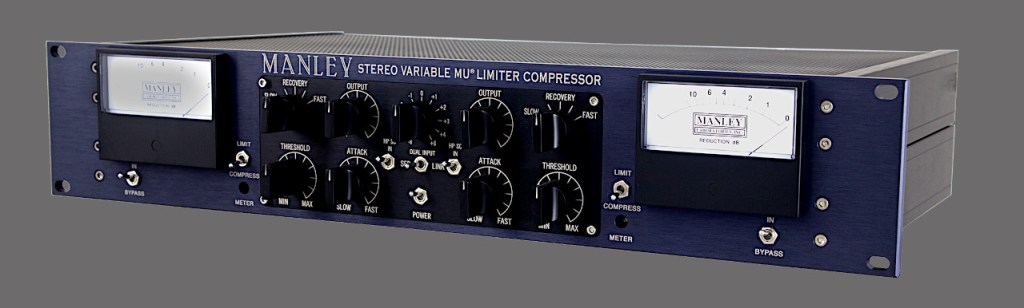
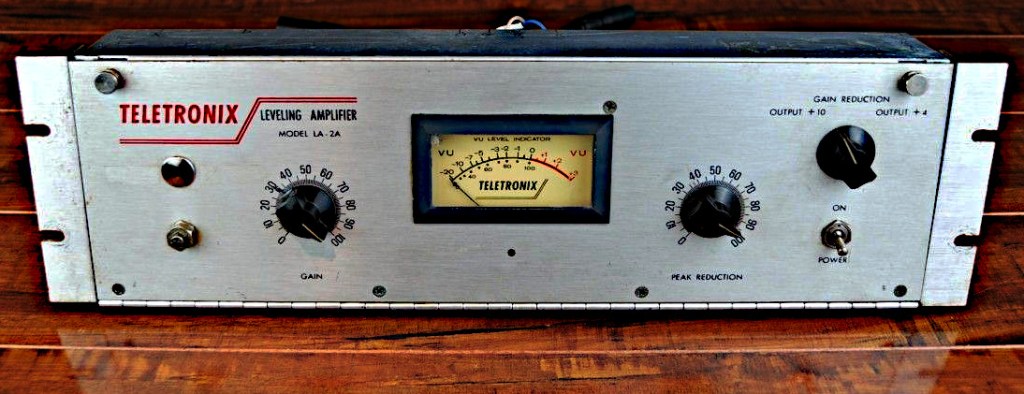
ADL, Tubetech, Universal Audio, Teletronics, a Fairchild 670,
classic and modern for the 90’s transistor gear like Focusright, Manley,
Neve, API, (ed. note: complete equipment list will follow the part 3 installment) to get the punch and tonal colours. We had digital reverbs galore if I wanted to use them and I improvised a live chamber for one song. We had an EMT250 Gold Foil Plate that Pat Sample obtained and Rob Nordstrom got working parked in the vocal iso booth. We also had an AKG spring reverb. I used the main room for delay fx as well. The SSL G was used more for monitoring, cue and routing and watching the DFM go berserk!
DFM?
Dumb F’n Meter, Joe Hardy’s term for a phase meter.

I used Brutus most of the time as a digital 3D mixing console. We had Troisi and Apogee ADA converters and the latest ever-crashing Pro Tools, with 17″ capillary bursting CRT’s and back in the machine room, an Otari 2″ 24trk and 2trk Analogue tape machines and oh yeah – 5 really loud 15,000 rpm 2 and 3 Gig SCSI hard Drives whining away. One of the studio’s hard drives Pat had named Quandary! Help!
What did you moniter on?
E.M. Longs – PSR’s $30k mains
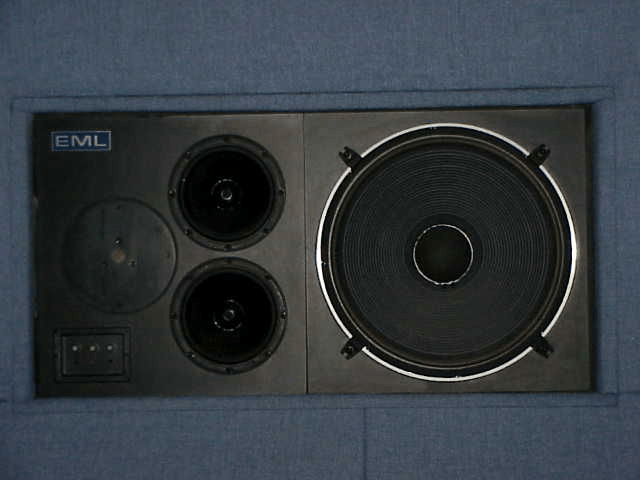
Genelecs, Yamaha’s , Auratones, Sennheiser HD250s, HD 580s and Koss headphones. I used a Troisi DA for headphone monitoring.
It must have been very difficult – daunting even for you to produce and engineer while being totally immersed in 3D audio.
I took a lot of breaks (laughs)
So you did use the tape machines?
No doubt. For tape echo, saturation, hiss, pre-delaying verbs and phasing – which Joe Hardy

and John Hampton taught me how to do at Ardent – thank you. I also printed to the 2trk though I never edited the tapes.
Oh – did I mention using secret dimensional devices and The bag of tricks!
Secret dimensional devices ? Bag of tricks? What devices? I know, later. (Bond nods and continues)
We had a ton of gear – really whatever I needed. If Pat Sample
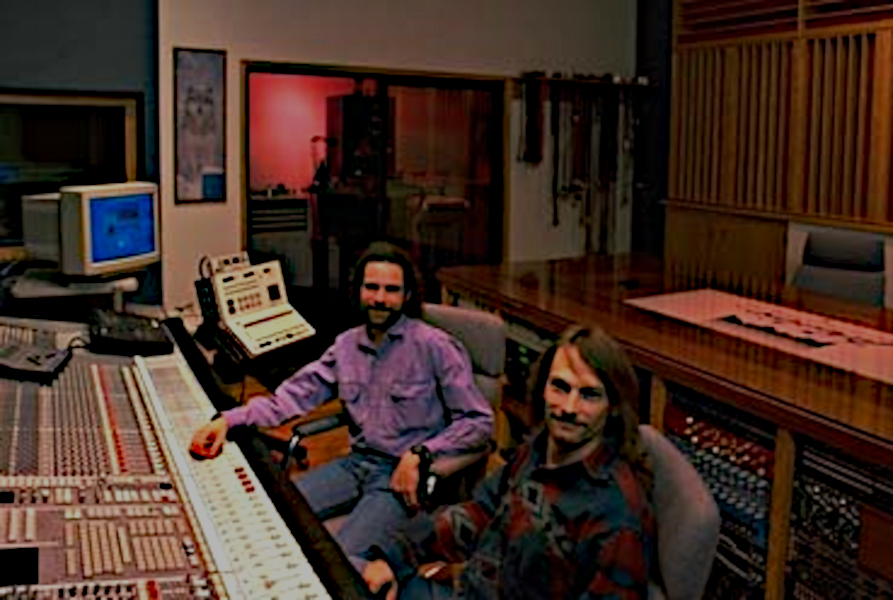
or 21A didn’t already own it – we had daily incoming bringing more – as Johnson was calling various manufacturers and telling them “we’re working on “Jimi f**king Hendrix — do you have any gear we can try?” It was like happy gear day everyday.
How many songs did you remix?
Six in all – “And The Gods Made Love”, “Crosstown Traffic”, “The Burning Of The Midnight Lamp”, “Voodoo Chile”, “Somebody’s House Is Burning”, “1983….(A Merman I Should Be)”, and “Ezy Rider”.
Can you tell us something cool about the songs?
Well briefly, on “Voodoo Chile” – when I set the faders for all 8 channels to unity gain – before my very ears was the original mix! Amazing! Also the 2 tracks of the make believe night club audience are really interesting. There’s the musicians that play on the track like Jack Cassidy, Stevie Winwood, Jimi and unidentified male and female voices. They’re talking about all kinds of things. Passing a joint, getting high, cracking jokes. Jimi gives Winwood some s**t for not taking a hit saying “no one can see you man”. Hearing them trying to clap to the beat like a real audience would instead of trained musicians is hilarious – Jimi tries to coach them – and then of course there’s the, “turn that damn guitar down!”, line. I extruded all 8 trks and then flew the guitars (x,y,z panned) and B3 with Brutus. It’s the most static mix.
“Somebody’s House Is Burning” has 2 lead guitar tracks at the end pan across the stereo field as if they were one (guitar) on one track being hand panned by the engineer. But no – it’s how Jimi orchestrated the arrangement of the two guitars. Jaw dropping.
Let’s see, “Crosstown Traffic” – the rhythm guitar is AUTHORITY. The existing 4trk Master is a composite of bounced and unbounced tracks. It was difficult to extrude.
“Ezy Rider”: – has awesome original self rotating dopplered guitars when setup properly with modulation FX centered and the guitars 180 degrees out of phase and panned hard left and right. Almost 3D. Wild! This was also the only Master tape that was in marginal condition by the way – Scotch I believe. I did the rythmn tracks submix in Tulsa at Studio Nine Studios. PSR was booked that week.
On “1983….(A Merman I Should Be)” I combined a 3D rendered transfer of the original release stereo mix, with individual instruments from the multitrack, 3D extruded, flown, panned, zoomed and the like. We did use the EMT 250 and lexicons for verb on this one I believe, and tape echo as well as the mic’d main room with artificially increased decay time . By the way Electric Ladyland Side C is one of my very favorites. I used to listen to it over and over. Greatness!
What about “The Burning Of The Midnight Lamp” ?
It’s the strangest remix and the most experimental – mystical if you will. I set up a virtual Hendrix Experience band in the main studio by placing 3 Studio monitors stacked on top of one another in the Drummers location, an Ampeg Bass Amp in the Bass player loc, a Fender Twin for keyboards off to the side and a Marshall Plexi half stack for Jimi’s amp position. I put another studio monitor on top of a 5’ stand for Jimi’s vocals and one more of the same for the BGVs. I then ran the dry channels to their corresponding monitors and amps and nailed the volume. I was doing re-amping in the 90’s! I used stationary micing and I carried a head/torso mic around the room for the listener’s POV with changes to different POVs for solos and vocals. I threw JBL Control One speakers

playing back the guitar solo across the studio high over the mics, and also tumbled them across the floor! I felt like I was in a trance. Trance-ported that is.
(Laughs) Incredible. So that’s why it sounded live and yet…out there.

Was the BMC aka “BRUTUS ” used throughout?
Yes
Is BRUTUS a name of affection or an acronym?
Both. The BMC was awesome but brutal to work with because of Zippering and other CPU starvation glitches, I had to remove a ton of clicks by hand as the auto programs were not up to it. Its midi controller software was impressionistic, it had, wait for it, hexadecimal event editing. When you turned it off you never knew if it would reboot again – ever, and also because it used brute force computing methods. Brutalize Us
What’s the acronym?
I don’t recall. (Bond laughs)
How does it work?
It takes mono, stereo or binaural audio and allows you to place it at any of about 4000 locations in a weighted 3D space around you. You had horizontal and vertical panning and delay.
Could you tell us a little more about your 3D production techniques for the project?
Well, I had to invent, pioneer and develop most of my techniques ’cause their were no manuals, sparse information and little user instructions, if any, for working with binaural, transaural or quasi 3D. It was a lot of experiment and logic modified intuition. It was purely artistic as there were no 3D methods that pre-existed or were publicly discussed. Chris Currell showed me a few cool things. John Hampton got me in to working with acoustic based mods as well as electronic or software ones with his “atomic guitar splitter” and acoustic baffle compressors. Anyway, like stereo or even mono, the 3D medium teaches you how to use it if you can pay attention. The Sound Theater and Soundplay were solutions to production and presentation.
I like to push the boundaries, break the rules. Keep a rock-n-roll atitude. I did a lot of binaural stacking for instance and other forbiddens. I like beyond virtual – surreality like the Midnight Lamp approach. I do Room shaping, using hard and soft reflectors, rpg diffusion and ASC tubetraps and ceramic resonaters to increase localized decay times (the Greeks), I take advantage of audio parallax for focusing, utilize audio negative space and I love magic filters such as thin glass in the capture of content and ceramic. I also use Guild Techniques but I can’t talk about them. (Bond says this with a ‘straight face’)
[pics of room]
Did you ever feel Jimi’s presence?
Yes …late at night, alone in the dark with a head /torso mic cradled in my arms, recorder slung over my shoulder, dancing and whirling around the studio re-recording “Midnight Lamp” I could feel Jimi’s presence – he was smiling…
That’s so crazy!
[We pause for refreshments]
Well that brings us to the ending sequence. What is it composed of? When I was listening I about fell out of my chair!
It’s a layer cake of Jimi’s dialogue, a Space Shuttle launch we recorded, other 3D sound effects and a take of the “Twister” tear-away shed that Johnson designed for the Twister movie – exploding.
The “Twister” shed? Space Shuttle?

The shed was a corrugated small metal structure, built to fly apart dramatically when pulled up into the air by a 75ft crane! Then it could be reassembled in a few minutes for another take. I put a $7,000 dollar binaural mic inside and there goes the roof and walls. It survived! It was fantastic.
I used the real time sound of the shuttle launch

and I also slowed it way down until you could hear the percussive pulsing of the engines detonating – like god’s own Harley! The mob running down the PSR and Sample home hallways is everyone I knew in Index, WA. That’s all-around Rob in your ear at the very end.
So how did you do the in-your-ear close ups, like at the end?
Whispered into a mic and then multi-processed.
The best close up ever was when I recorded a buzzing insect – not sure what exactly – and had it land in your ear which we used on the early 21A Immersion Audio demo. I recorded the insects by putting honey on the ceiling of James home office and opening the window. At one point there were hundreds of flies, bees and various insectia. Eventualy one landed on the mic. I think we got most of them out… It was way too Pavlovian. People threw their headphones on the floor! All in the name of…
What is a Pavlovian?
Its my slang for an unconsciouss reaction to an audio stimulus. Like the knock on the door or the insects.
You did the editing and assembly on Pro Tools?
Yes and you can’t believe how much fun it is to edit in 3D space! If you ever thought 2D audio editing was challenging… A good 2D edit in 3D might beam to a new loc at the cut point because X, Y and Z are not matched spatially. Which means re-do it, do a very long dimensional crossfade or flange it like Zappa said, haha (grins). Its like video or movie editing.
I hadn’t thought about that aspect.
It’s really stupid difficult.
Would you please tell us about your secret dimensional devices?
If you tell me about yours first. Well they’re secret – there is some custom and off-the-shelf hardware, there’s a one trick pony device made by a local genius. Some software. Think odd, mutated, discarded, experimental and transaural before the lawsuit devices. They are really unusual mods.
What about the bag of tricks?
Look – over there – ‘is that Bob Dylan’s Grandmother?’*
What? OK.
This is off the subject but what is your favorite compliment or critique of your 3D audio production and engineering?
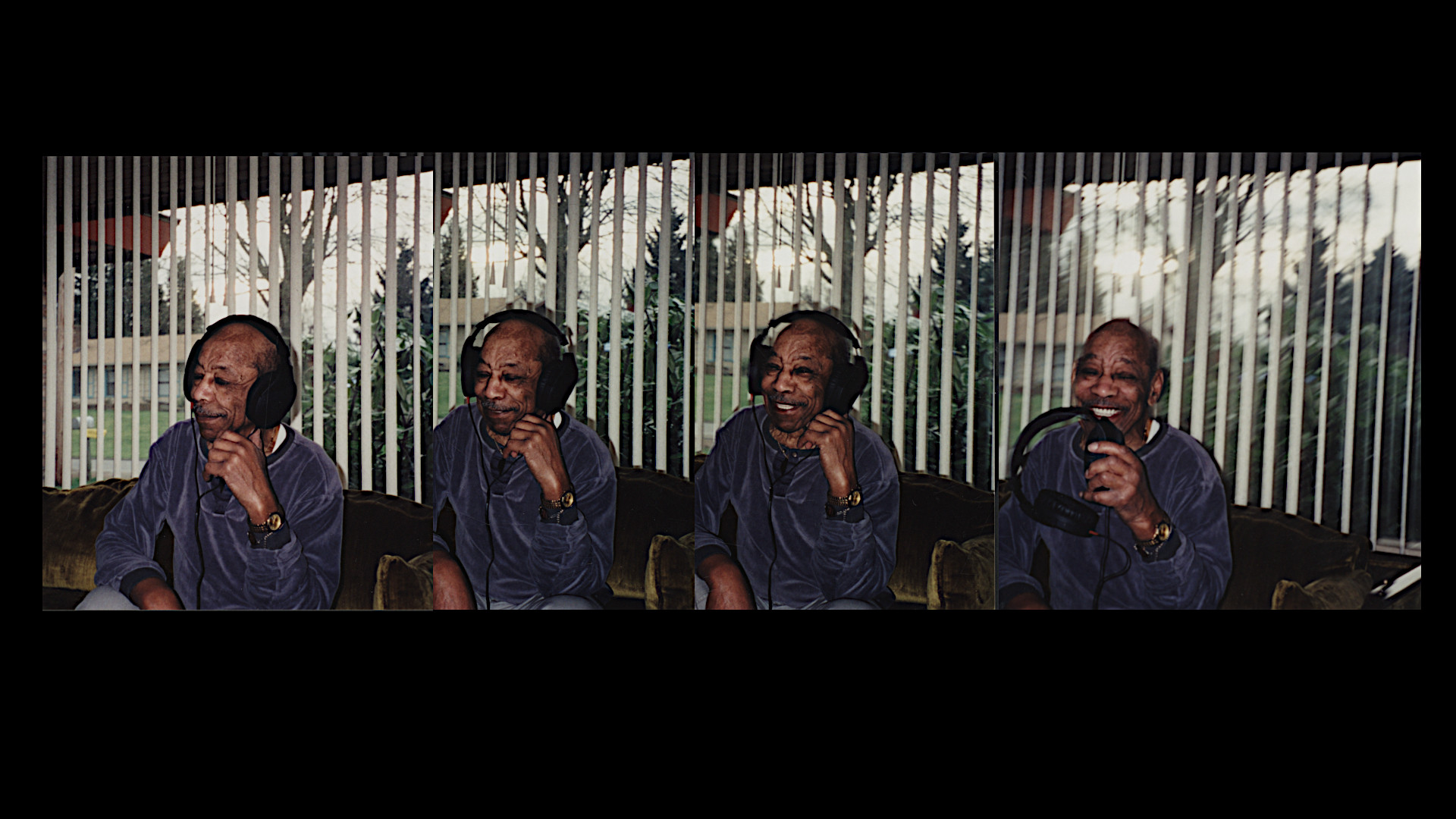
That has to be Herbie Hancock – he said, “best I’ve heard”, after listening to HD3D Immersion Audio at Ocean Way. However there is one more – from Jimi’s Dad. After hearing the finished Red House recording he said, “Jimi would have loved this!”
Favorite piece of gear?
My brain I think
Favorite Artist?
Come on
So…finally – it was a wrap?
Yes, or so we thought. I finished the mixes for headphones and processed the ones for speakers only, using Penrose, a transaural processor in February ’99. Then I edited and assembled the Masters in March. It was radical, I was happy with the results! But I was really exhausted from a 100% effort – sustained for a lot of laps. Except for any re-do’s and the mastering which I assumed the label would have done by somebody like Joe Gastwirt or Bernie Grundman, I was done! What a rush. I headed back to Tulsa just one more time to sleep you know in an Oklahoma coma.
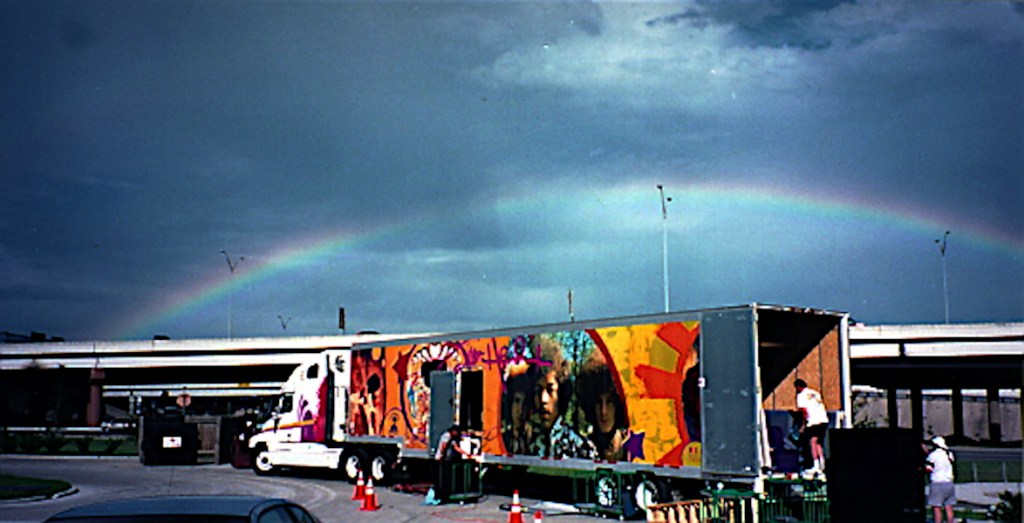
And then after only a few days off I get a wake up call…it’s Johnson – “Janie wants to take it on the road…” I’m like – what ??? “Van’s Warped Tour and Woodstock!!”
ed. note – quotes and other punctuation added by S.A.M. for clarity © 2023 by SOUNDARTMAGAZINE.COM and Geoff Bond
In The Next Issue-
Articles 3D Part 3
JIMI HENDRIX IN HD3D – THE RED HOUSE PROJECT – Part 3
and now for something exceedingly different it’s
“WARPSTOCK 99″
 SOUND ART M A G A Z I N E